
Text and photos: Juuso Viljanen / Uuttaja.fi
Finland has traditionally drunk a lot of light coffee, but since the 2010s at the latest, the trend towards dark roasted coffees has been on the rise.
Coffee can be roughly divided into three different roast types. You can find light, medium and dark coffee in stores.
Although the starting product is always the same, i.e. raw coffee, a professional roaster combined with a functional and reliable roaster conjures up very varied worlds of taste.
The importance of roasting for coffee flavor
In fact, the roaster cannot really determine the flavors. The flavors and aromas are
determined in the coffee already during its growth phase. They are influenced by the growing region, variety,
processing, etc. However, certain flavors and aromas are created in the roaster depending on how dark the final product is desired.
The roaster's job is to use his senses to find the most optimal and ideal roasting profile for each coffee type, so that all the best properties and flavors are revealed from the coffee.
Roasting cannot save poor-quality coffee, and similarly, poor roasting of top-quality green coffee can turn it into a bland and tasteless product that cannot be saved in the manufacturing process. Poor roasting can, for example, result in the coffee being too light and “underdeveloped” in terms of flavor.
Coffee that is roasted too dark or even burnt will only taste toasty, bitter and
burnt taste. This kind of coffee has no value except as a roadbed material,
as a tealight holder or as a compost filler.
Dark coffee pops twice

I could write a whole book about the chemical changes and reactions that occur during the roasting of coffee beans, but let's try to keep it simple and easy to understand by sticking to the basics.
However, the coffee bean is roasted to the point where it starts to change color from green to brown as the moisture in the bean is lost as it heats up. At the same time, the pressure inside the bean increases and eventually the water and carbon dioxide are released from the bean, causing the bean to expand and pop (the so-called first crack). When the coffee is roasted really dark, the coffee starts to crack more during the so-called second crack. Some people think that the coffee is already spoiled by then, but of course it is a matter of taste.
When coffee is roasted, a huge amount of aromatic compounds are formed in the beans, which play a crucial role in the taste and properties of the final product. In the lightest
In roasted coffees, the flavor often has fruity, floral and berry tones, quite
These are also flavors that tend to disappear with darker roasting.
Light roasts are also more acidic than darker roasts. You can bring out the acidity when extracting coffee by using a higher water temperature than usual with hand-held extraction tools.
Medium roast coffees are generally slightly sweeter than light roasts because the sugars in the coffee are more developed. Medium roast coffees are not as acidic as the lightest roasts. In fact, medium roast coffees are easier to make espresso with, without the acidity being overwhelming.
Roasting plays a major role in dark coffee

There can be big differences in the different stages of dark roasting. In summary, however, it can be said that the darker the roast, the less roastiness it has, and the more flavors it has. In the lightest dark roasts, you can taste aromas of tobacco, chocolate, or nuts, for example, but in the darkest roasts, even those have disappeared and the end result is a roasted and smoky, even bitter broth.
The French milk coffee drink café au lait is made with this type of really dark roasted coffee, and in Italy, really dark roasted coffees are also preferred. However, the amount of caffeine is not much affected by the degree of roasting.
Many coffee lovers report that dark roast coffee is less taxing on their stomachs or doesn't cause heartburn as easily as lighter roasts. There's no clear-cut truth to this, but as with many other things, the saying goes: listen to your body. If dark roast is more suitable for your stomach and taste buds, then go for it!
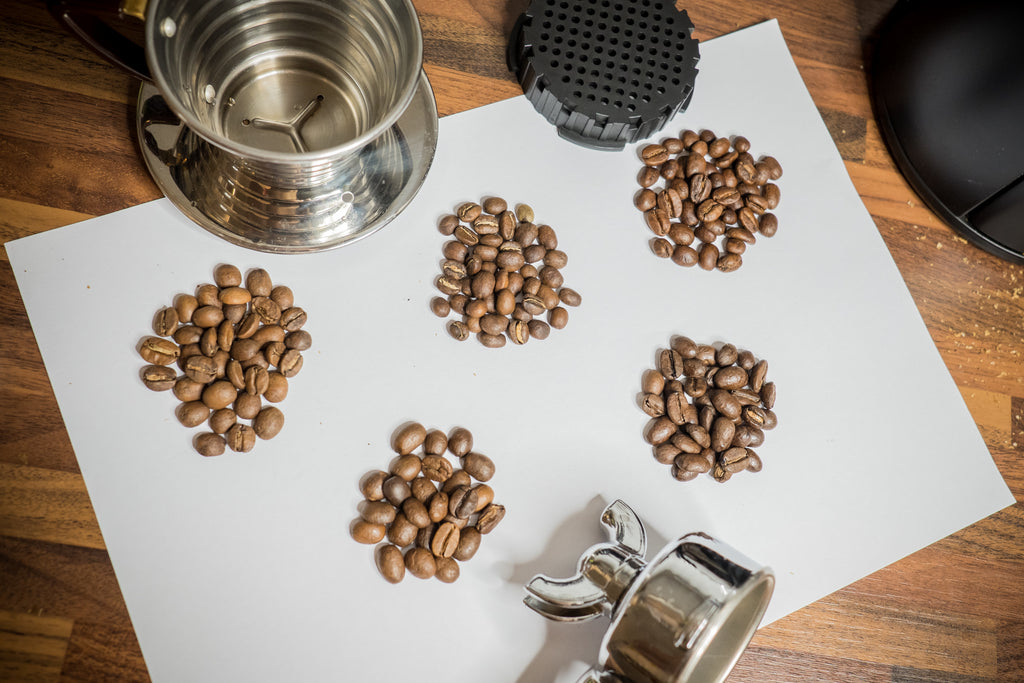
Light - medium roast - dark

In short: light roast coffees can be very aromatic,
Complex, flavorful, and easy to drink. Medium roasts have the same flavors as light roasts, and the sweetness is usually more prominent.
Dark roasts emphasize chocolate, smoky, and toasted tones. You can find your favorites by testing them out, even if it's a bit boring.
The degree of roasting slightly affects the recommended preparation methods, as, for example, the lightest roasts will not be able to achieve their full potential when prepared in a pressure cooker.
Similarly, pour over methods are not the most favorable for dark roasts.
However, there is nothing stopping you from experimenting. Testing can open up completely new dimensions – for example, try making espresso from really light and acidic coffee.