
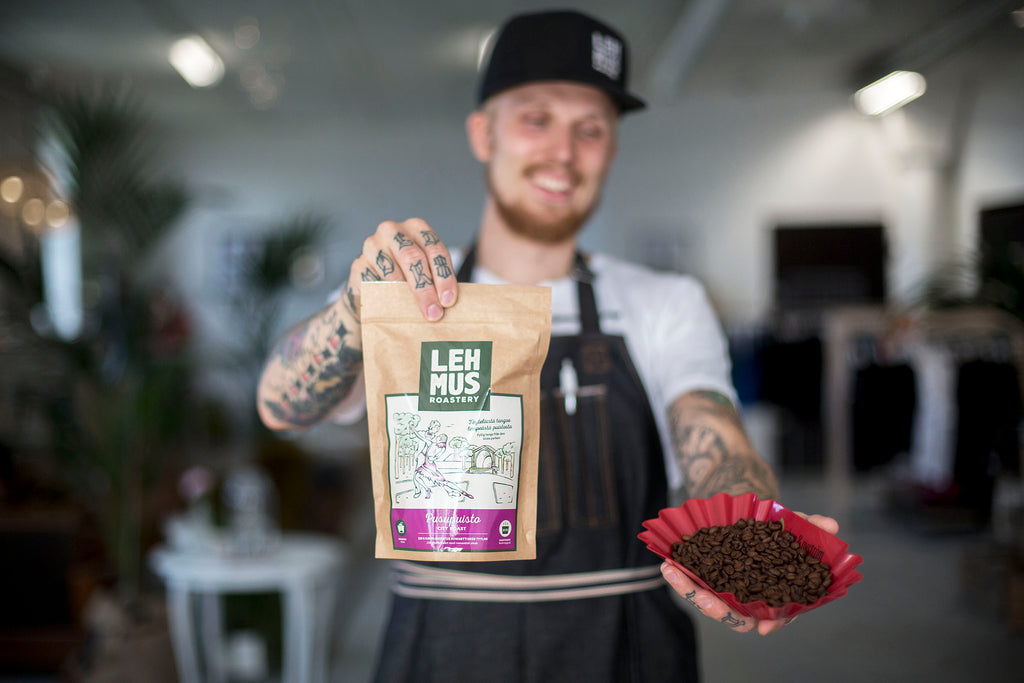
Lehmus Roastery's coffees arrive from all over the world in Lappeenranta, where we roast the coffees by hand. From Satamatie, the coffee packages leave for shops and cafés.
In this new series, we'll be introducing the stories behind different coffees. We'll start with Pusupuisto , the purple package that has become one of our most popular coffees since its launch in spring 2017.
A nuanced bean from El Salvador

The estate of Finca Las Nubes. Photo: Cafe Imports
Pusupuisto's coffee beans come to us from El Salvador in Central America, from the Finca Las Nubes farm. The name of the farm is Spanish and means "farm of the clouds" in Finnish. The coffee is grown at an altitude of 1450-500 meters, so the name is justified. The farm has been growing coffee for almost 100 years. It is located on the slope of a volcano in the western part of the country, about an hour's drive from the capital, San Salvador.
El Salvador is the smallest country in Central America, with an area only four times the size of South Karelia. El Salvador has been cultivating coffee since the 18th century, initially for domestic consumption but increasingly for export. The coffee industry is still the foundation of the country's economy, accounting for more than half of the country's gross domestic product.
Coffees from the Finca Las Nubes farm found their way to Lappeenranta when Lehmus Roastery's roasting master Visa Tuovinen was looking for an interesting, high-quality and tasty coffee that could be roasted a little darker than average.
Tuovinen ordered various beans from the Central American region from Cafe Imports and among several options, he found this Bourbon Arabica bean. After several test roasts, he found Pusupuisto, which is a medium-dark, fresh, nuanced bean that offers a diverse flavor.
The Natural method is changing to honey treatment, what does that mean?

For the latest harvest, the Finca Las Nubes farm changed its processing method. Previously, the coffee bean, or more accurately, the coffee berry seeds, were processed using the natural method, now using the honey method.
Natural means dry processing, meaning that the collected coffee berries are dried in the sun without water treatment. After processing, the dried berries are taken to processing stations, where the pulp and other layers around the bean are removed. Natural processing gives the coffee a stronger flavor compared to beans that have been washed. Berry and fruitiness are also emphasized, as the berry has time to affect the bean for a longer period of time as it dries.
Now the beans are processed using the honey method. Honey does not refer to the processing with honey, but rather to the sweetness created by the processing. In honey, the surface of the fruit is broken at the beginning of the drying process, but a film of sugars is left on the bean, which absorbs moisture from the air and transfers aromas to the coffee bean as it dries. The fruitiness and sweetness of the fruit pulp are not transferred to the coffee bean as strongly as in the natural method. Thanks to the honey method, the aromas transferred to the coffee bean are clearer and more subtle than in the natural method.
Pusupuisto is a full-bodied and nuanced coffee

After the coffee berry has matured in the volcanic soil of Santa Ana for 8-10 months, the ripe red berry is hand-picked from the branches of the coffee tree. Drying and processing takes about a month, after which the raw berry seed, or more commonly known as the coffee bean, is transported to Lappeenranta.
At Satamatie, the beans are roasted according to the roasting profile made by the roasting master to a slightly darker than medium roast, allowed to rest in a barrel, ground or packaged as beans and shipped to the world.
Pusupuisto itself follows Lehmus Roastery's tradition of naming its coffees after famous places in Lappeenranta. Located below the fortress, Pusupuisto is the oldest park in Lappeenranta, and people have been drinking coffee under the trees and behind the old singing platform for centuries.
The tango of Latin culture and the Lappeenranta humppa also combine in the label, creating an appealing atmosphere right down to the coffee.