
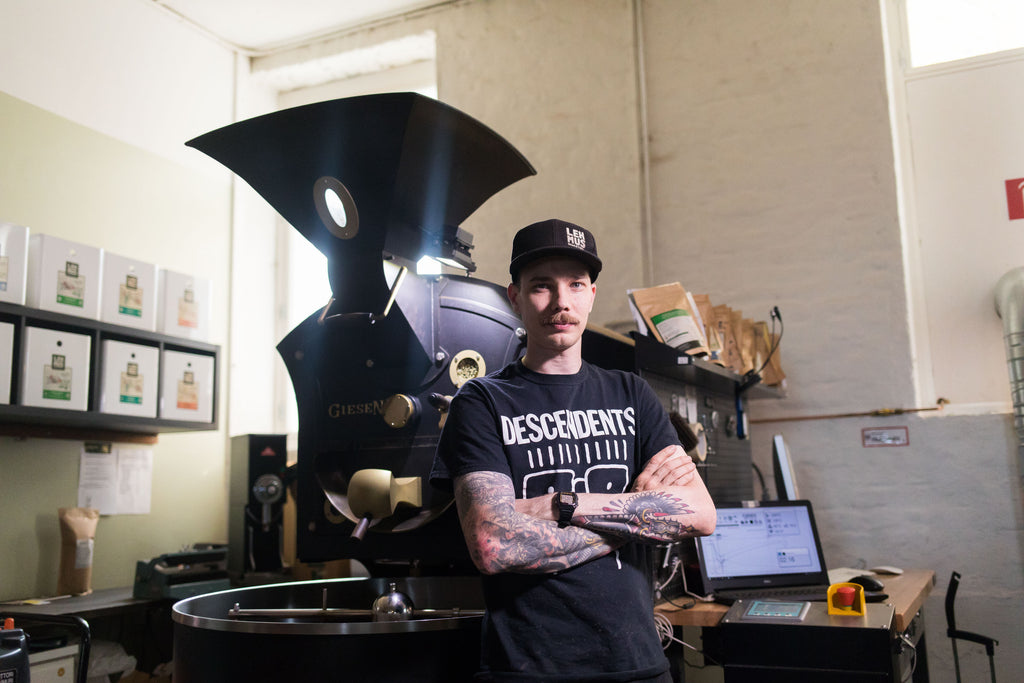
Jussi Tyrisevä is most often found at the roaster at Lehmus Roastery . Tyrisevä has worked in production at Lehmus Roastery since the roastery's early days in 2016, and he became head roaster in the fall of 2017.
You can't study to become a roaster in Finland, so you have to learn the job yourself. Tyrisevä learned the basics of roasting together with Visa Tuovinen , who was working at Lehmus Roastery at the time .
Developing himself and honing the nuances of roasting is everyday work that he does together with another roaster at Lehmus Roastery, Aki Loiri .

Lehmus Roastery roaster Aki Loiri at work. Tyrisevä and Loiri develop the roastery's coffees together.
In Finland, roasters come to the industry from a variety of backgrounds. The head roaster at Lehmus Roastery is a civil engineer who graduated with just a few courses and tutorials. This educational background is useful in many ways, such as in production planning.
“I think that a certain technical mindset and engineering-like problem-solving skills help in my daily work. In coffee production, we also try to replicate each roast in the most optimal way possible, and striving for and improving that is important to me.”
Roaster's week starts with planning

The roaster's daily routine begins in the morning with production planning. The goal is to roast coffees during the week mainly from the lightest roast towards the dark end, as light and dark roasts require different temperatures.
Once the plan has been made, the toaster is usually warmed up and ready to roast and roasting can begin.
On Satamatie, at the foot of the Lappeenranta Fortress, coffee is roasted using a Giesen drum roaster with a maximum capacity of 15 kilograms.
One batch of coffee is roasted for about 12-17 minutes, depending on the roast level. Between roasts, Tyrisevä weighs the raw beans for the next roast batch, manually adjusts the roaster if necessary, and tries his best to respond to questions and requests from other people at the roastery, such as interviews like this one.

The quick reactions that sometimes occur also add their own spice. If a certain roast is needed more than planned, the morning plans are now just a fond memory.
Roasting may seem like an easy job. Beans in the roaster and out in a moment. However, the work requires concentration, as a successful roast requires attention throughout the roasting process, but especially when it's time for the beans to move from the roaster to the cooling tray. A ten-second mistake can ruin the roast.
Developing coffees is the most inspiring part of the job

According to Tyrisevä, the most interesting part of a roaster's job is developing new coffees. The processing method and growing background of the raw beans are important when the roaster is trying to make the bean shine. This kind of knowledge can only be gained by roasting a lot of coffee and studying things from all sources.
“It’s interesting to see how and with what roasting settings you can bring out the flavor of a coffee bean and how you can get the most out of it. Different beans require different movements. When the coffees are finally tasted by a group and they get approving comments, that’s great.”
Although the work at the roastery is somewhat technical and very independent, Tyrisevä sometimes remembers to reflect on the fact that tens of thousands of coffee packages flow through his hands to a wide variety of coffee tables.
“The purpose of roasting is really to provide joy and taste experiences to people. That way, you are on the verge of interesting work.”

You can't study to become a roaster at any school. How does Jussi Tyrisevä think you can get to know the industry – other than by roasting coffee?
1. By reading books
“Coffee guru Scott Rao’s The Coffee Roasters Companion is a good general reference book that goes through the basics of roasting.”
2. By watching videos
“There are tons of videos on YouTube about the origins of coffee, roasting, and coffee extraction. The search term coffee roasting gets you started.”
3. By Googling
“If you can speak English at all, there is of course a lot of content online in text format. Scott Rao and James Hoffman are good search terms related to coffee.”
Text & photos: Arttu Muukkonen