
When a coffee user becomes interested in other types of coffee besides traditional filter coffee, they quickly come across talk about the degree and coarseness of coffee grinding.
We here at Lehmus Roastery wanted to shed some light on the matter so that the mysterious grind choices in our online store wouldn't just be a mysterious choice in the middle of an order.
The extraction times of coffee drinks differ depending on the preparation method. Coffee preparation is based on the encounter of coffee and water. These raw materials, in turn, meet in different ways: boiling, pressurization and infusion.
Coffee enthusiasts who grind their own coffee often find themselves experimenting with slightly different grind sizes and brewing times based on their own preferences. The coarseness of the coffee grind affects how quickly the coffee extracts its flavor and aromas into the drink.
As a rule of thumb, the finer the grind, the faster the extraction time . Finely ground coffee powder has a larger surface area that is in contact with water.
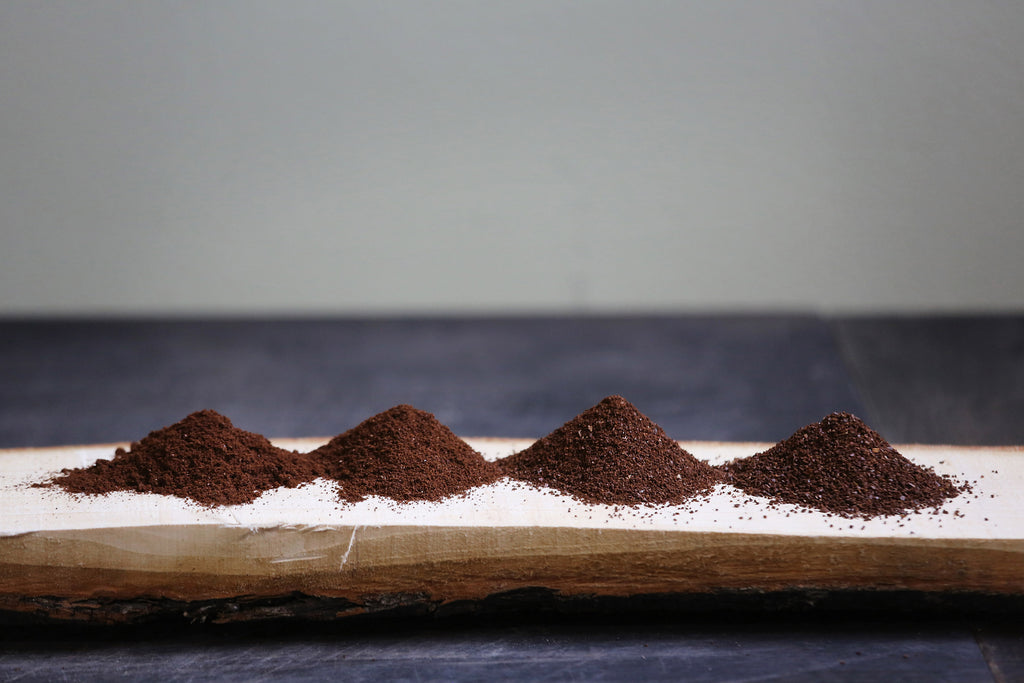
Below are illustrative pictures and presentations of different grinds. The coffee used in the pictures is Dark Fox.
Espresso grinding (grain size approx. 0.2mm)

Espresso coffee extraction is based on pressure. Hot water is forced through the coffee grounds at a pressure of 8–18 bar into the pan or directly into the cup. The extraction time is only a few tens of seconds, which is why the grind is very fine.
Espresso coffee is used as the base for many popular coffee drinks such as cappuccino , caffé latte or caffé corretto .
Nut pan grinding (grain size 0.2–0.38mm)

A mocha pot, or more commonly known as a pot, also makes coffee under pressure, like when making espresso coffee. Many people call coffee made with a pot espresso. The pressure in a pot is significantly lower than in an espresso machine, so coffee enthusiasts call coffee made with this method mocha.
The water is placed in the bottom of the pan, from where it rises to the top of the pan as it heats to boiling point and travels through the coffee powder. The extraction time is relatively short. That is why the grind is also fine. Espresso grinds available in stores are a good starting point for many people to make mocha coffee.
Aeropress (variable coarseness)
Aeropress is a relatively new coffee brewing method. It is also based on the pressure that the coffee maker creates by pressing a plastic piston into a cylinder containing water and coffee.
The Aeropress can be used to make coffees of varying strengths, from strong espresso-like coffee to milder filter coffee. The coarseness of the grind can also vary from roughly filter coffee coarseness to fine espresso grind.
Filter grinding and pour over (granule size approximately 0.75mm)

Traditionally, coffee brewed by gravity filtration is more slowly extracted than coffee brewed by pressure. The filter grind is medium coarse to avoid extracting too much bitterness from the coffee for drinking.
Filter coffee is the most common coffee drink in Finland, and it is most often made with a coffee maker. The taste of filter coffee can be influenced by small tweaks. Use a clean jug to pour the water and stir the finished drink so that the strongest drink does not remain at the bottom of the pan.
Press and pan grinding (grain size approximately 1.5mm)

When making coffee with a press pot and a traditional pot, the coffee powder is directly mixed with water. This means that the extraction time is longer and the grinding is coarser. With a press pot, the powder is pressed into the bottom of the pot with a sieve before serving, while with a traditional pot, the grounds are expected to settle to the bottom. Pot and press pot coffees are aromatic and fattier than other types of coffee.
You can also clearly see the different grits when you press your thumb into the powder clumps:

