
Text & photos: Juuso Viljanen / Uuttaja
If you are interested in different coffee experiences at home, you will probably need to invest in different extraction and preparation equipment. But how do you know which device is best for your taste?
By experimenting, of course, or by testing in cafes. For example, at Satamatie 6, you can choose coffee prepared with different extraction methods in addition to regular filter coffee.
The internet is also full of presentations, equipment stores, and instructional videos on the subject.
Since not everyone has time to browse YouTube, we've collected the most common ways to make coffee at home in this article.
We also compiled a list of the pros and cons of each method. With this guide, you can start your own coffee brewing journey!
Nut pan or espresso machine?

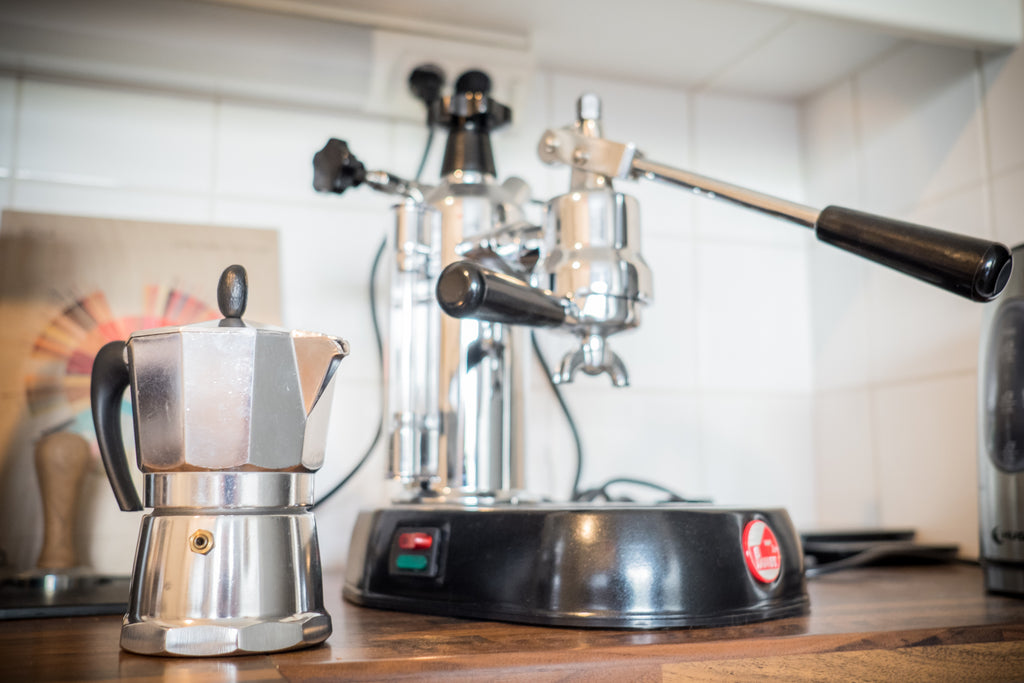
If stronger coffee is your thing, then either espresso machines, on the more expensive end, or a good old-fashioned coffee pot, on the more affordable end, are the options.
In many contexts, a nut pot is referred to as an espresso pot, but this is an incorrect name. Instead, a moka pot is the correct name.
Both machines produce a small dose of strong coffee. Espresso can be continued with frothed milk to make a cappuccino or latte, for example, and nut coffee is suitable for use as part of an affogato (a dessert where coffee is combined with vanilla ice cream, for example).

Using an espresso machine requires a lot of learning, and quality machines are not cheap. It is not even worth investing in cheap “espresso machines”, as their quality is poor and the end result of the coffee is unhappy.
Instead, there are only good things about a moka pot: the finished coffee is very espresso-like, the pot is extremely easy to use, and there is one for every stove model (electric, gas, and induction stoves). There are also moka pots that run entirely on electricity. They are also available in different sizes, depending on your needs; from one cup to nine cups and even more.
A nut pot is not so much a coffee connoisseur's tool, as you don't need to weigh the coffee and water separately and you can't influence the temperatures very effectively, but it is definitely a coffee connoisseur's tool.
Pour over methods: V60, Chemex and others

If you like to tinker with different variables when making coffee and prefer lighter roasts, pour over methods may very well be the best choice.
There is also a wide range of devices: Harion V60 , Clever Dripper, Chemex , Kalita Wave and so on. It is worth noting that each of these also has its own appropriate filter papers, and they do not necessarily overlap.
The absolute plus of pour over is precisely the controllability of things: the brewer can control and change practically everything: the coarseness of the ground coffee, the amount of coffee, the amount and temperature of water, the pouring speed, the pouring method, the total extraction time, and so on.
With manual devices, you can get a different result from the same coffee every time you extract it. But if the end result wasn't to your liking, how do you know what to fix or change? Pour over is a skill that requires practice and learning, but in the end it's like riding a bicycle: once you learn it, it's always in the back of your mind.
However, pour overs are not the most ideal way to prepare dark roasts and are not a “people in need” method of coffee preparation.
The Aeropress is a cult favorite

The Aeropress is also perfect for the high-fisted person. Of all the coffee brewing devices, perhaps the tube that looks the least like a coffee brewing device, however, again allows for complete control of all variables in practice and combines them with full immersion brewing and the production of a finished product under pressure.
Aeropress is a spectacular method and when used correctly, it produces perfect cups time after time. Of course, it requires a lot of practice. The advantage of Aeropress is that it is easy to clean and allows you to control the variables. In addition, it is suitable for both dark and light roasts. There are even world championships dedicated to Aeropress.
French Press

For those who prefer a stronger and "fattier" coffee, a French press or a coffee pot are the ideal tools. Neither of these have filter paper and the preparation is done by full immersion, i.e. by extracting water and coffee without anything extra.
A pressure cooker is easy to keep clean and can also be used to make tea. They are also sold in many grocery stores and are not prohibitively expensive. A pressure cooker is not suitable for the lightest roasts, but it is an excellent tool for medium to dark roasts.
Soot pan

Anyone who has been out and about for a while in nature will surely be familiar with a soot pot. It also makes it extremely easy to prepare unforgettable coffee experiences. The soot pot is the most “forgiving” of the coffee brewing methods, meaning you don’t have to be exact when it comes to water and coffee. The pot is easy to wash and keep clean.
An unfortunate feature of a pan that has been used for a long time is that the sooted surface can become a bit messy (if the outside of the pan has been sooted due to cooking over an open fire). There are many sizes of pans and there is sure to be one that suits everyone's needs.
( Here you can find the recipe for Lehmus Roastery's best sokpan coffee.)
Old, patinated pans with a “cockroach flap” are also suitable tools. A sooty pot is the absolute crowning glory for outdoor trips, hikes, fishing trips, and so on. But it also works great on the stove at home.
Here are the most common methods of preparation, with their pros and cons. What was your final result: what is your method?
---
If you want high-quality, freshly roasted coffee, visit Lehmus Roastery's online store.