
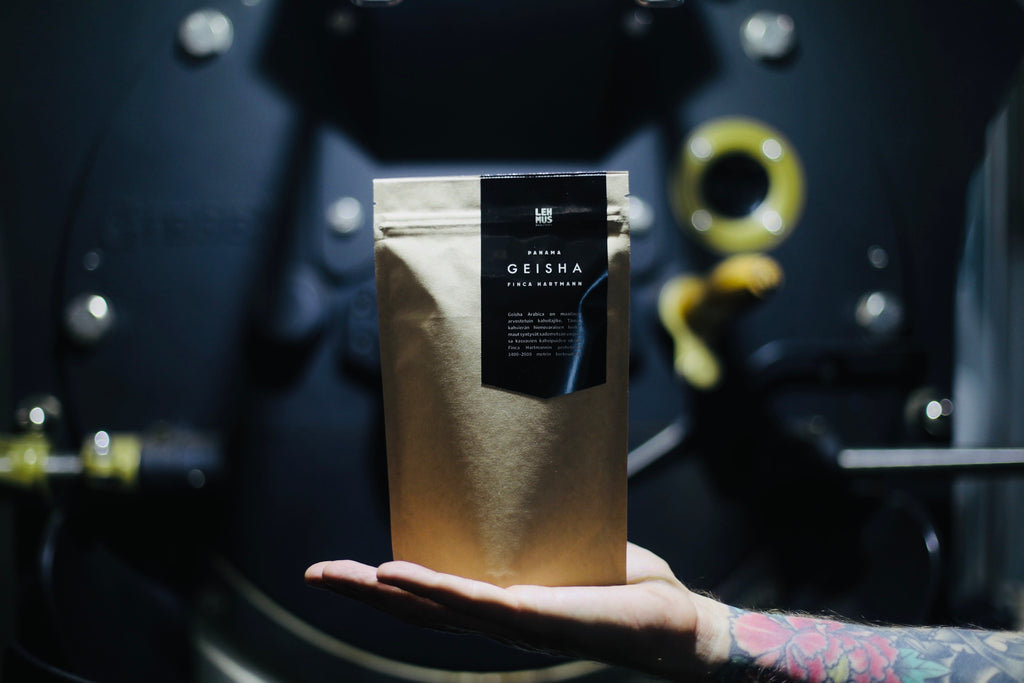
Panamanian Geisha is the world's most prized coffee variety due to its particularly soft and delicate taste. The Geisha variety originated in Ethiopia, in the Gesha region. There, the variety was discovered in a coffee forest in the 1930s. From Ethiopia, the variety was introduced to Panama via coffee research centers in Tanzania and Costa Rica in the 1960s. The variety began to be cultivated when it was discovered that Geisha is reasonably resistant to the leaf rust that afflicts coffee plants.
However, it took a long time, until the 2000s, before Geisha rose to world fame. In 2004, the Peterson family, who own the Hacienda la Esmeralda farm, won the Best of Panama coffee competition with their Geisha. Its price per kilo rose to 42€/kg at auction, which was a huge price for green coffee at the time. However, in 2013, the most expensive Best Of Panama coffee cost 750€/kg, while in recent years, at its most expensive, the price has risen to over 2000 euros per kilo.
After the success of 2003, more and more farmers began to develop Geisha and its availability improved. Today, Geisha is also grown in Colombia, among other places, which is why the coffee has a double name. Geisha and Gesha are sometimes confused and both names can be used, but in orthodox terms, Geisha is used for Panamanian coffee and Geisha grown in other countries is called Gesha, but practices vary.
Geisha is a sophisticated, sweet, aromatic coffee variety from Panama.

What makes Geisha so special? Its soft, floral and delicate aroma is something that is usually found in Ethiopian coffees. Geisha is a delicate variety, so it cannot be grown in just any conditions. Panama has a history of growing high-quality coffee, so there has been more opportunity to develop varieties than in countries that have previously grown bulk coffee and only later moved on to processing specialty coffees. Panama also has the optimal fertile soil and climate for growing Geisha.
So is the coffee worth the price? The taste is not ten or a hundred times better than an Ethiopian coffee of a similar aroma. However, the taste is almost always fruity and nuanced and very sweet. All in all, a balanced and high-quality coffee.
You can also think of it this way: you can basically enjoy the world's highest quality luxury coffee for just a few euros per cup. So if you compare it to the prices of wine or whiskey or the daily cost of luxury cars, Geisha is a relatively inexpensive investment in luxury.
Finca Hartmann focuses on growing top varieties in the middle of the rainforest
Very little Geisha is produced each year, and even fewer quality batches. Lehmus Roastery's Finca Hartmann Geisha comes from an award-winning farm: Hartmann's farm won the Best Of Panama competition last year with its Geisha (a different batch than the one we roasted).
The Hartmanns grow coffee in the shelter of the rainforest, meaning the coffee plants grow in the shade of larger trees. This allows the coffee berries to ripen at a leisurely pace. The farm extends from 1400 meters to 2000 meters above sea level, meaning the growing altitude is optimal for growing quality coffee.
The Hartmann family also takes care of the rainforest: in addition to the coffee bushes, they plant trees on their property, and over 300 different species of birds can be spotted on their property. When the coffee bush is surrounded by jungle trees, the larger trees provide shade, allowing the coffee to grow more slowly and have time to accumulate a lot of flavor. The surrounding trees and plants, with their leaves and berries, also act as a natural fertilizer, giving the coffee more flavor from the soil.
Finca Hartmann is located in the Chiriqui coffee growing region in western Panama, near Costa Rica. The coffee plantations, located on the slopes of the Barú volcano, receive abundant fertile growth from the volcanic soil of the volcano, which last erupted in 1550.
The coffee has been processed in the traditional way by sun drying on raised beds, the flesh of each coffee berry has been dried on top of the seed on a mesh bed for 18 days. The flesh has then been separated and the seeds, or coffee beans, have been packed in a vacuum-sealed package.
The raw coffee is preserved frozen to ensure exceptional quality and freshness.

We have purchased a 10 kilo batch of this coffee, which we wanted to use for our own internal top quality project. Coffee is best preserved frozen, so we have frozen this batch in a separate coffee freezer purchased for this purpose in 300 gram vacuum-packed bags.
Nothing has been stored in the freezer before, and we disinfect it before use to ensure that no off-flavors are released from storage, even into green coffee.
Before this project, we have been monitoring the behavior of roasted coffee when frozen and the results have been good. So for a few years we have been preserving the best coffees of the harvest seasons roasted and vacuum-packed, and this spring we have tasted them. The flavors have been preserved excellently, and in blind tastings no differences have been observed between freshly roasted and frozen coffees.
Freezing green coffee beans is the best way to preserve coffee from the roaster's point of view. This way, the aromas of the coffee practically do not change at all. Green coffee beans themselves remain usable for years, but of course, coffee from the fresh harvest season is always the tastiest. We had already considered freezing green coffee beans for special batches, but when we heard this spring that we could buy this Geisha, we decided to take action.
Over the past few months, we have been testing the taste of Geisha by roasting small batches by hand each month, and then comparing it to Geisha stored unfrozen. The frozen coffee seems to maintain a similar flavor profile to fresh. This will allow us to continue roasting small batches of premium coffees in different seasons when the coffee is stored in the freezer.
(Why don't we freeze all our coffee? Because our coffee is mainly stored in Antwerp, Belgium, and we only keep a couple of weeks' worth of stock at the roastery, we roast all the coffee we receive directly.)
Because there are so few Geishas, we have been test roasting a lot of different coffees for a couple of months in an unusually small batch size for us, so that we have been able to collect data on the behavior of a small roasting batch. Now we make Geishas in this small batch size. That is why we only release 20-30 bags of coffee at a time, so that we can guarantee the quality of that batch. So the roasters have exciting times ahead of them with every roast!
We are packaging Geisha in 100 gram bags so that as many people as possible have the opportunity to taste this coffee. Check here to see if the coffee is still available!